The Empty Tomb – Fact or Fiction?
What if Jesus did rise from the dead as He predicted?
Stevens County Times, Pastor's Perspective, April 2025
By Pastor Tim White
What would you say if I told you that faith in Christ is not necessary to believe Jesus rose from the grave just as He said? It is true. Over 30 years ago, I was preparing a sermon for Easter Sunday, and as I delved into the evidence for the resurrection, I was amazed by the undisputable proof I found. I have given you some sources at the end of this column for your own study. I hope you will pursue them.
Let me give you the basics, and as I do, please consider how the resurrection of Jesus affects your outlook on your life now and what follows death.
First, let me establish two foundation truths. The evidence for the Bible’s authenticity rises above any major book of any other non-Christian religion. For example, the Book of Mormon and the Quran were written by a single author over short periods (3 months and 23 years, respectively). At the same time, the Bible was written by over 40 authors over a span of 15 centuries of human history.
Moreover, these forty-plus authors wrote sixty-six books from three continents (Europe, the Middle East, and North Africa) and in three different languages (Hebrew, Aramaic, and Greek). Despite the vast span of human history, the expansive geography, and various cultures, the inner harmony and cohesiveness within the Bible on the most crucial and controversial subjects is uncanny, speaking in human terms.
As to the Bible’s authenticity, unmatched. There exist over 24,000 ancient copies of the books of the Bible, some dating to within 100 years of the original New Testament document. There are no – I repeat no – books of antiquity (religious or secular) with anything close to such an overwhelming volume of evidence supporting the accurate accounts and translations of the Bible as we have today.
Second point: As to Jesus’ historical reality, (non-Christian) Roman historians such as Suetonius, Tacitus, and Pliny the Younger refer to Jesus as an actual historical figure. Most notable is (non-Christian) Josephus, born in Israel a few years after Jesus’ resurrection, who wrote about Jesus’ life, ministry, death by crucifixion, and resurrection (Antiquities, xviii, 33).
E. M Blaiklock, Professor of Classics at Auckland University, said: “…I tell you that the evidence for the life, the death, and the resurrection of Christ is better authenticated than most of the facts of ancient history…”
Jesus was a real person who predicted how He would die and rise from the dead in three days. Let’s look at some (scratch the surface) of that evidence.
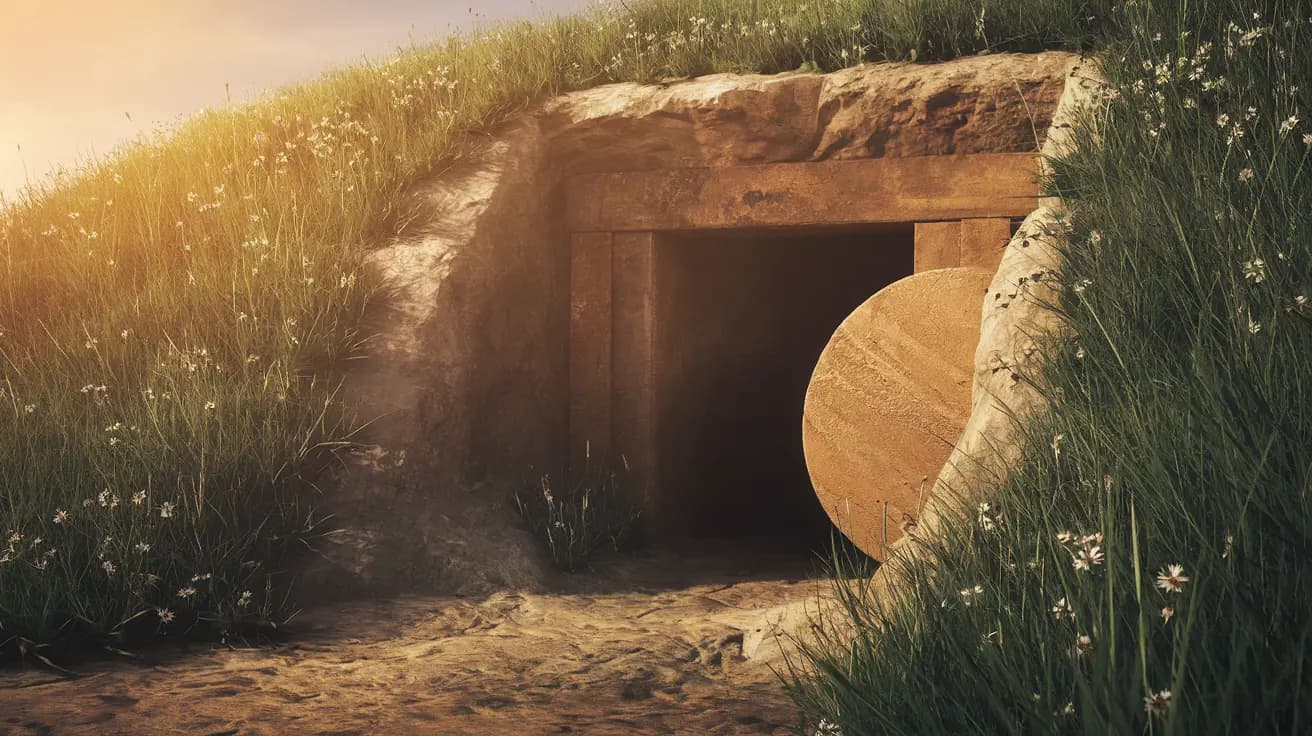
The fact that the tomb is still empty says a lot. All the enemies of Christ’s followers needed to do to destroy Christianity in its infancy was to produce Jesus’ dead body – that never happened – ever! Furthermore, highly trained Roman guards stood in the way of anyone attempting to steal Jesus’ body, which lay on a cold slab behind a two-ton stone. It is ludicrous to think the disciples, defeated and confused as they were and seeing the presence of a Roman guard, would even attempt to steal Jesus’ body. However, history records that every one of the eyewitnesses to Jesus’ resurrection boldly proclaimed that Christ rose from the dead, even as they faced execution by some of the cruelest and most inhumane methods.
Would you be willing to die as they did for something you knew was a lie? Of course not.
The account in all four of the “Gospels” (Matthew, Mark, Luke, and John) of the graveclothes left behind is miraculous. The graveclothes were strips of linen, with layers of fragrant herbs and oils applied between them. This process created a cocoon of sorts weighing about 75 to 100 pounds (John 19:39). It would be exceedingly time-consuming and almost impossible to remove the body from the graveclothes. No one would take the time to do so if they were stealing the body. What the women and the disciples saw when they peered into the tomb was a partially collapsed cocoon-type object, missing a body.
Another significant point is that Christianity grew and flourished from the one place that, if it was fraudulent, could prove it was false: Jerusalem. All the main characters were there, and the tomb was just a short walk outside the city walls. Once again, Jesus’ corpse and tomb could be readily displayed, thus extinguishing the Church Jesus said He was building (Matt. 16:18).
After His resurrection, Jesus appeared multiple times over a period of 40 days (Acts 1:3) with a physical body that they could touch, and He even ate some food in front of their unbelieving eyes on the evening of His resurrection (Luke 24:39-43). The Apostle Paul speaks of over 500 people simultaneously seeing Jesus after His resurrection and comments that most were still alive when writing that letter (1 Cor. 15:6).
These biblical accounts of Christ’s life, death, and resurrection were written by eyewitnesses in the time and place where they occurred (unlike the two major books). Therefore, if the biblical record were false, the named individuals would still have been alive and could have exposed the fallacy, thereby ending Christianity in the first century. It did not end; in fact, Christianity is now the largest religion in the world.
The evidence is overwhelming: Jesus Christ lived, ministered, predicted His own crucifixion and subsequent resurrection three days later. That Easter Sunday morning everything changed! When the angel came down, he rolled away the massive stone, not so Jesus could get out, but so all the world could see that “He is not here; He has risen, just as He said.” (Matt. 18:6).
There is much more evidence on these matters, “But these are written that you may believe that Jesus is the Christ, the Son of God and that by believing you may have life in his name” (John 20:31). And as Peter declared, “Salvation is found in no one else, for there is no other name under heaven given to men by which we must be saved” (Act 4:12).
One does not need a religious faith in Christ to believe the authentic written accounts by the eyewitnesses and secular historians about Him and His eternally empty tomb. However, in order that your sins may be wiped away so that you will “not perish but have everlasting life,” you must confess your sin and surrender the rest of your life to following the only who can do so – He’s the one with the empty tomb.
To dig deeper: “Resurrection Evidence” on Charlie Campbell’s website, “AlwaysBeReady.com”; Also, search “Evidence for the Resurrection, Josh McDowell” on “leaderu.com” as well as “The Resurrection: Fact or Fiction?” by Pat Zukeran.